
The Art of Detachment: TRULY ALLOWING
A Mediator’s Communiqué on Sovereignty, Surrender & Spaciousness
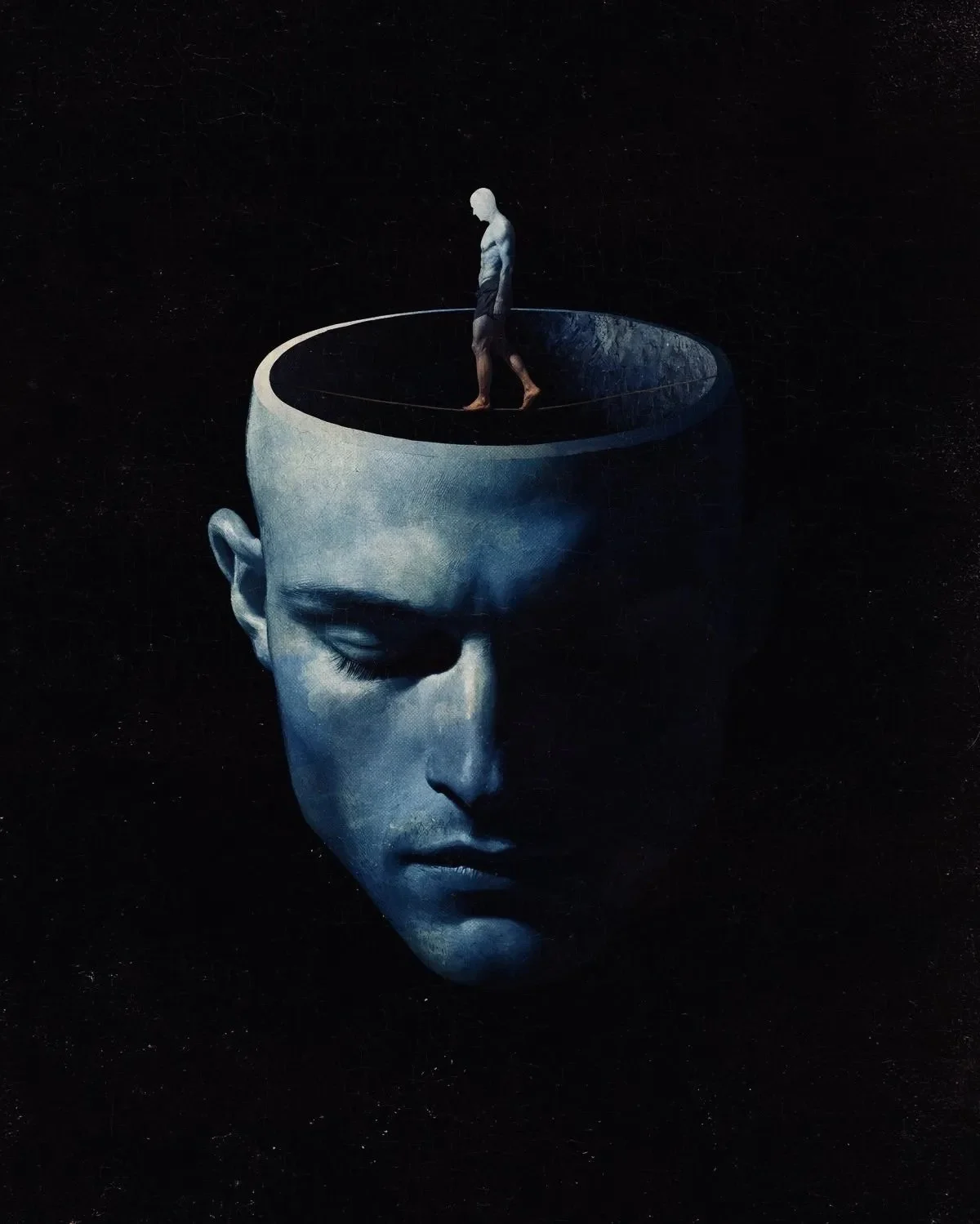
“Headspace” by Turkish artist Can Dağarslanı
For the past few weeks, I’ve closely witnessed the wilderness of the urban psyche in the creative space:
Obsessive lovers. Restraining orders. Lost ambitions. Friendships clinging past their expiration. Doppelgängers with prominent natal Capricorn placements, structured and composed. Ghosts of relationships returning in fragments, limbless and crawling, desperate to be remembered.
It has become undeniably clear: something must be released.
Lately, I’ve grown increasingly aware of the illusion of control. The need to unclench. To remove our hands from the wheel of this social vehicle and allow the quieter, wiser self within to lead.
In surrender, I encountered the paradox: True control is never seized through force; it is revealed through the grace of release.
Many who are deeply shaped by their environment may appear to have let go, but often to a degree that breeds a quiet, corrosive distrust. Not only toward those who hold power, but toward the self that still longs to reclaim authorship over its own truth.
Why You Might Detach
Our choice to detach stems from a deep reverence for the human experience. We are drawn to those who live with intention. Those who ritualize the everyday, see life as art, notice the precise presence of the divine, and move in alignment with the elemental. We value being surrounded by people who seek harmony and meaning, rather than merely accumulating experiences.
This kind of presence creates a safe space for sacred interactions to exist. Especially now, in a modern world that often resists the sacred and buries it beneath layers of amnesia and denial of our divinity. Without intentionality, our attachments and experiences risk becoming diluted and overwhelming. They are not inherently devoid of value, but their proximity to the sacred becomes compromised.
The moment something is rationalized or filtered through the fixed and automatic lens of human understanding, it begins to lose its purity. We impose our own idea of purity onto it — either commodifying it, preserving and elevating it, or completely alchemizing its essence.
In doing so, we leave behind something greater than ourselves: a movement, a zeitgeist, or perhaps an article titled The Art of Detachment: TRULY ALLOWING.
Similar to individuation, but with a slightly different intention, detachment is the act of removing oneself from experiences. Whether people, circumstances, environments, or thoughts — emotionally, spiritually, energetically, or physically. It also involves creating mental distance by not obsessing over a decision once it’s been made. You allow yourself grace and peace, giving yourself the space to regroup and express your autonomy without needing permission or validation.
The art, skill, or discipline of detachment lies in the sustained practice of letting go and surrendering your awareness to what truly matters on a fundamental level.
This is a powerful spiritual practice with many benefits. The primary one is cultivating presence and simply being.
How to Tell if You’ve Detached
To understand detachment, you must first recognize its opposite. Attachment is a natural impulse, one that triggers the desire to control, to shape an outcome, to secure what we believe we need.
It feels like this: “I care more, so I hold even tighter. Try to guide, to manage, to control with precision. I focus all my energy on making something happen a certain way.”
But this obsession with how something should unfold is often the very thing that blocks it from unfolding. Desire, when fused with fear, becomes resistance. And resistance keeps you stuck in the state of not having.
The Situation:
The more tightly you grip, the further it slips.
Emotional detachment isn’t coldness, it’s clarity. Sometimes, you must step back to see clearly. So you can evolve. If not, you’ll be forced to one way or another. This withdrawal may be difficult at first, but over time, it gives rise to healthier boundaries, stronger connections, and deeper self-trust. It is an act of wisdom, not avoidance, rejection, or denial.
Many people stumble into detachment through heartbreak, disappointment, or burnout. Others discover it intentionally through reflection, spiritual work, or necessity. Regardless of how it begins, detachment is rarely instinctive. That’s why it becomes an art form. A discipline. A conscious practice of emotional sovereignty.
You begin to sense when your energy is being hijacked by obsession, social manipulation, or the fantasy of control.
You desire to feel deeply without drowning. To engage fully without losing yourself.
When you begin to detach, you’ll notice life becomes quieter. Calmer. Lighter. Not because the chaos disappears, but because you no longer grip it with both hands.
You stop chasing closure.
You stop needing constant reassurance.
You stop trying to prove your worth to people committed to misunderstanding you.
You return to yourself.
True detachment allows for full participation without emotional captivity.
It is not indifference, but rather spaciousness.
The skill of being in life, without being owned by it.
Clear Indicators of Healthy Detachment
You feel your feelings, but you no longer over identify with them.
You care, but you don’t cling.
You respond thoughtfully rather than react impulsively.
You let silence do the talking when needed.
You no longer actively control how people perceive you.
You stop manipulating or chasing outcomes.
You hold your standards, even when it’s lonely.
You walk away without theatrics.
You love from fullness, not fear.
You no longer need closure from the people who hurt you.
Detachment doesn’t require a dramatic exit. Often, it’s a quiet shift in your internal world. A softening of urgency. A reclaiming of energy.
Yes, it may be prompted by pain, but it becomes a sanctuary soon after.
Only from that sanctuary, can you begin to design a life that is steady, soulful, and sovereign.
